Cost of Living in Thailand for Missionaries

Vlad Radchenko · Co-founder, Sowfund · 6 min read | Aug 12, 2026
Thailand has long been a strategic hub for missionary work in Southeast Asia, not only for ministry within the country itself, but as a base for outreach across the wider region. It's also one of the more affordable places in Asia to live, though "affordable" covers a wide range depending on where you settle and how you structure your household.
This guide breaks down what missionaries actually spend in Thailand, covering housing, food, transportation, healthcare, visas, and language study, so you can build an honest, well-researched support budget.
A Note on Regional Variation
Thailand's cost of living varies dramatically by city. Bangkok, the capital and largest metro area, is the most expensive place to live in the country, with rents and general costs approaching those of other major Southeast Asian capitals. Chiang Mai, in the north, is a long-established hub for missionaries and NGOs and typically runs 30–40% cheaper than Bangkok for a comparable lifestyle. Secondary cities and rural provinces, particularly in the north and northeast (Isaan), are even more affordable.
Figures throughout this guide are in USD and reflect mid-2026 conditions. The Thai Baht (THB) fluctuates against the dollar, so build some buffer into your support budget for exchange rate movement.
Visas for Missionaries
Before budgeting, it's worth understanding the visa landscape, since it shapes both your costs and your legal footing. Thailand offers a specific Non-Immigrant Visa-R (single-entry, valid 90 days) and Visa-R-A (multiple-entry, valid one year) for those performing missionary or religious work with the concurrence of Thai authorities. The R-A visa requires sponsorship and an official note from Thailand's Immigration Bureau, arranged through one of a small number of religious organizations recognized by the Thai Ministry of Culture, including the Church of Christ in Thailand, the Thailand Baptist Convention, the Evangelical Fellowship of Thailand, the Seventh Day Adventist Church, and the Roman Catholic Church.
Because visa sponsorship, renewal fees, and any required travel for visa runs carry real costs, budget for visa-related expenses as their own line item. Figures vary by sending organization and visa type, so confirm current costs with your sponsoring body early in your planning.
Housing
Budget range: $250–$1,000/month
Housing cost depends heavily on city. In Chiang Mai, a one-bedroom apartment in a central, convenient location typically runs $250–$450/month, while a larger three-bedroom home suitable for a family runs roughly $550–$1,260/month. In Bangkok, a modern one-bedroom in a central neighborhood like Sukhumvit or Silom runs $500–$1,000/month, dropping to $350–$700/month in outer districts along the transit lines; three-bedroom units in central Bangkok can run $1,550–$3,100/month.
Missionaries serving in smaller northern towns, Isaan provinces, or rural communities generally find housing at the lower end of these ranges or below it. As with any country, choosing a neighborhood closer to the community you're serving, rather than an expat-heavy district, is a common way missionaries manage this cost without sacrificing livability.
Food
Budget range: $150–$450/month (couple); $250–$650/month (family of four)
Thai food is inexpensive, fresh, and widely available, which makes eating locally one of the more effective ways to manage a budget. A household shopping at local markets and cooking most meals at home can keep monthly grocery costs as low as $165–$220 (6,000–8,000 THB). Regularly buying imported goods, such as cheese, specialty meats, and Western brands, pushes that figure toward $400–$450 (up to 15,000 THB) or more per month.
Street food and local restaurants are also remarkably affordable in Thailand, and many missionary families supplement home cooking with local meals without significantly straining their budget. As in other countries, the cost climbs mainly when a household tries to replicate a Western diet rather than adapting to what's regionally available.
Transportation
Budget range: $50–$200/month
Thailand's cities offer several transportation options depending on context. In Bangkok, the BTS Skytrain and MRT subway make getting around affordable without a vehicle, and motorbike taxis are available for short trips starting around $0.65 per ride. In Chiang Mai and smaller cities, a motorbike is the most common and practical choice for missionaries, offering low-cost, flexible transportation suited to local roads and traffic patterns.
Missionaries serving in rural provinces or covering multiple ministry sites may need a car, which raises the transportation line item meaningfully once fuel, insurance, and maintenance are factored in. Build your transportation budget around your specific ministry geography rather than a generic city estimate.
Utilities
Budget range: $70–$180/month
Utilities for a typical studio or one-bedroom apartment run roughly $48–$140/month, with air conditioning as the primary driver of cost in Thailand's tropical climate. A household running AC regularly should budget toward the higher end of that range. Internet is affordable and generally reliable in cities and larger towns, typically $12–$28/month for a solid connection. Rural and northern provincial areas may have slower or less consistent service.
Healthcare
Budget range: $70–$250/month
Thailand's private hospital network is one of its genuine strengths for missionaries. Several Bangkok hospitals hold international (JCI) accreditation and are well regarded throughout the region, with costs substantially lower than comparable care in the US or Singapore. A GP visit at a private hospital typically runs $22–$56, and a specialist consultation runs $42–$98.
For ongoing coverage, private health insurance for an individual in their 30s generally runs $70–$250/month for Thailand-focused plans, or $150–$360/month for broader international plans with wider regional coverage. Premiums rise with age, so factor that into long-term planning if you expect to serve in Thailand for many years. Certain visa categories, including some long-term visas, carry minimum insurance requirements set by Thai immigration, so confirm the specific threshold tied to your visa type.
Medical evacuation insurance is also worth carrying for situations requiring specialized treatment outside Thailand. Confirm current rates directly with an insurer, since evacuation coverage varies by provider and destination coverage.
Language and Ministry Expenses
Thai is a tonal language and a genuine learning curve for most Western missionaries, making structured language study a worthwhile early investment. Language schools in Chiang Mai and Bangkok typically charge $700–$1,000/month (25,000–35,000 THB) for intensive, full-time group instruction, while private lessons run roughly $17–$28/hour, a more flexible and often more affordable option for missionaries balancing language study with ministry responsibilities. Course-based group programs are also available in Bangkok for a fixed fee per block of hours.
Ministry expenses, including outreach materials, hospitality, transportation for ministry activity, and event costs, vary widely by context. A reasonable planning figure for a couple in active ministry is $200–$400/month, adjusted to your specific work.
Realistic Monthly Budget Estimates
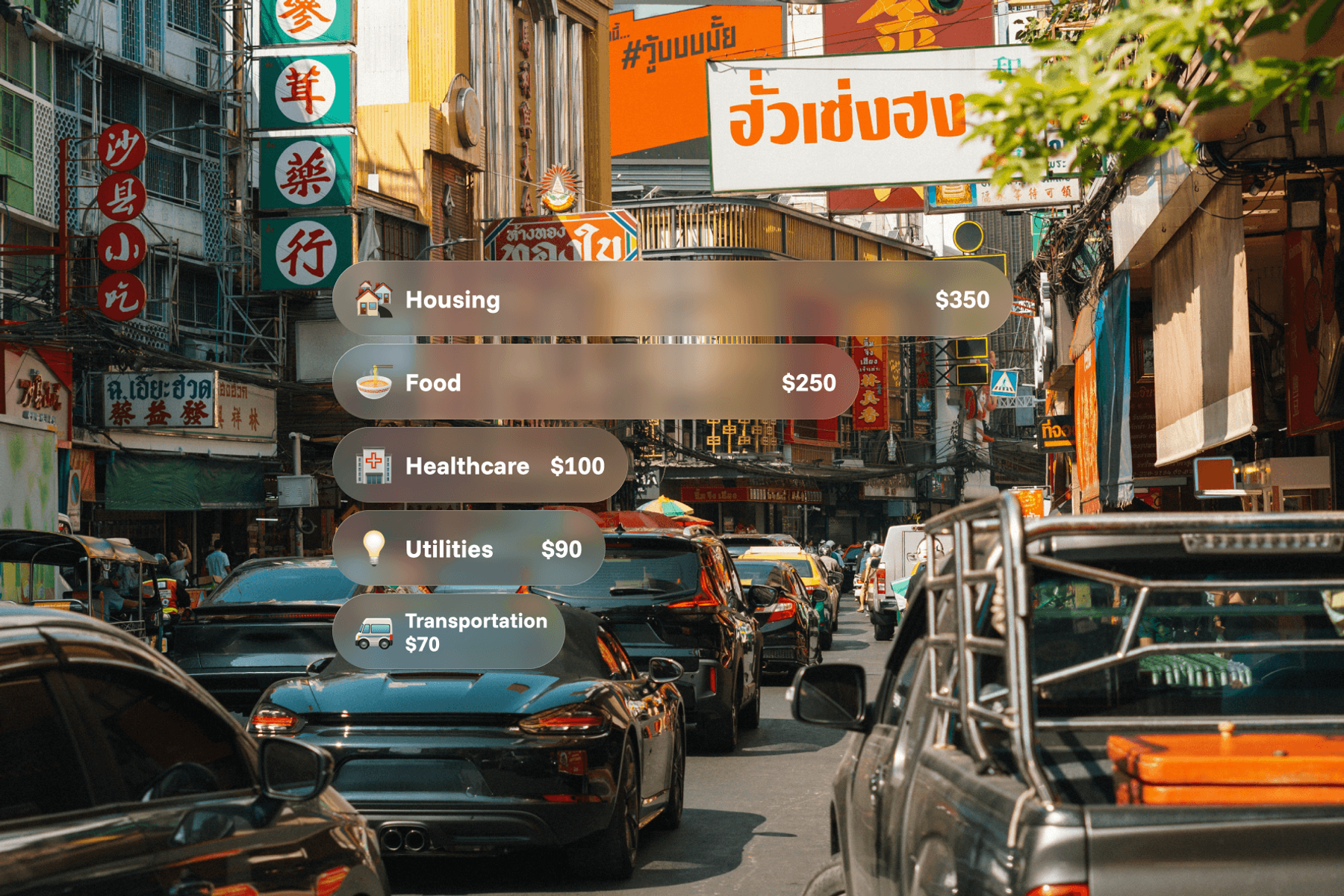
Lean budget (Chiang Mai or smaller city): $1,200–$1,700/month
- Housing: $350
- Food: $250
- Transportation: $70
- Utilities: $90
- Healthcare: $100
- Ministry expenses: $200
- Miscellaneous: $150
Mid-range budget (Bangkok or comparable urban center): $2,000–$2,700/month
- Housing: $700
- Food: $400
- Transportation: $150
- Utilities: $140
- Healthcare: $180
- Ministry expenses: $300
- Miscellaneous: $200
For families with children, add $300–$700/month depending on schooling choice. International schools in Bangkok can be a significant expense, while homeschooling or local schooling options keep costs down considerably. If you're actively studying Thai, add your language school budget as its own line item on top of these estimates.
Building Your Support Budget
Thailand rewards missionaries who plan specifically rather than generally. The gap between a lean provincial budget and a comfortable Bangkok budget is wide enough that a vague, rounded figure won't serve you well in support raising. A realistic, well-researched number gives your donors confidence that you've done the work, and gives you the financial footing to focus on ministry rather than money stress once you're on the field.
For more on building and sharing your support budget, see How to Create a Missionary Donation Page in 5 Minutes and compare regional costs in Cost of Living in Mexico for Missionaries and Serving in the Philippines: What to Budget For.