Serving in the Philippines: What to Budget For

Vlad Radchenko · Co-founder, Sowfund · 6 min read | Jul 9, 2026
The Philippines is one of the most active missionary destinations in Asia — and for good reason. English is widely spoken, the culture is deeply Christian in many regions, and the cost of living is genuinely affordable compared to Western standards. But like any country, the actual numbers depend on where you're serving, how your family is structured, and how intentionally you're managing your support budget.
This guide breaks down what missionaries actually spend in the Philippines, category by category, with realistic figures so you can build a support budget.
A Note on Regional Variation
The Philippines is an archipelago of over 7,600 islands, and costs vary significantly depending on where you're based. Metro Manila is the most expensive context — costs there approach those of mid-tier Southeast Asian capitals. Secondary cities like Cebu, Davao, and Iloilo sit in the middle range. Rural provinces and smaller island communities are considerably more affordable.
Security is also a regional consideration. Certain parts of Mindanao have experienced ongoing conflict and require additional caution in planning. Research your specific region carefully, and factor any security-related costs — additional housing precautions, restricted movement, travel insurance — into your budget.
Figures throughout this guide are in USD and reflect mid-2026 conditions. The Philippine Peso fluctuates against the dollar, so build some buffer into your budget for exchange rate movement.
Housing
Budget range: $250–$800/month
Housing in the Philippines is generally affordable, though quality and location vary widely. In provincial cities and rural areas, a clean, furnished two- to three-bedroom house or apartment can be found for $250–$400/month. Many missionaries serving in these contexts find that their housing budget is one of the smallest line items in their overall support.
In Metro Manila, Cebu City, or other urban centers, expect to pay $500–$800/month for comparable space in a safe, accessible neighborhood. Manila's higher costs reflect both its economic density and the concentration of international organizations and expatriate communities that drive prices up.
A practical consideration unique to the Philippines: flooding. Particularly in Metro Manila and low-lying coastal areas, the wet season (June through November) brings significant flooding in some neighborhoods. This affects both livability and logistics. When choosing housing, elevation, drainage infrastructure, and proximity to flood-prone areas matter — not just rent price.
Food
Budget range: $200–$450/month (couple); $350–$600/month (family of four)
Food in the Philippines is genuinely inexpensive when you eat locally. Wet markets (palengke) offer fresh produce, fish, chicken, and rice at very low prices. A couple who shops at local markets and cooks most meals at home can eat well for $200–$300/month.
The cost rises meaningfully if you shop at supermarkets like S&R (the Philippine Costco equivalent) or international grocery chains, eat at Western-style restaurants, or rely on imported products. Missionaries who approximate their home diet rather than adapting to local food will spend more — typically $350–$450/month for a couple.
Filipino cuisine — rice, fish, vegetables, chicken, fresh tropical fruit — is excellent, affordable, and widely available. Adapting your diet to local food is both the most economical and often the most culturally effective approach.
Transportation
Budget range: $60–$200/month
The Philippines has a dense and inexpensive public transportation network in urban areas. Jeepneys, tricycles, multicabs, and ride-hailing apps like Grab make getting around cities affordable — missionaries using public transit in urban contexts can often manage for $60–$100/month.
Owning a vehicle is more common for missionaries serving in rural or multi-site contexts where public transit is limited or unreliable. A second-hand motorcycle is the most common solution for rural missionaries — practical, fuel-efficient, and navigable on roads that larger vehicles can't always manage. Budget $100–$200/month for fuel, maintenance, and insurance if you own a vehicle.
Inter-island travel is a cost specific to the Philippines that many missionaries don't initially account for. If your ministry involves movement between islands — boat fares or domestic flights — this adds real and irregular expense. Build a quarterly travel line item into your budget if your context requires it.
Utilities
Budget range: $100–$250/month
Utilities deserve specific attention in the Philippines because electricity costs are among the highest in Southeast Asia — and air conditioning in a tropical climate is not optional for most families. A household running air conditioning regularly in a warm coastal city can easily spend $150–$200/month on electricity alone.
Water and internet are both affordable. Fast, reliable fiber internet is available in most cities and larger towns, typically running $20–$40/month. In rural or island contexts, connectivity can be slower and more expensive relative to speed.
A generator or backup power setup is a practical consideration for missionaries in areas with regular power outages (brownouts). This is a one-time cost but worth factoring into your initial setup budget.
Healthcare
Budget range: $50–$150/month
The Philippines has good quality private hospitals in major cities — significantly better than many comparable countries at this income level. Routine doctor visits, dental care, and medications are very affordable by Western standards. Many missionaries pay out of pocket for routine care without financial strain.
Private health insurance in the Philippines for an individual runs $50–$100/month depending on coverage level. For a family, budget accordingly. PhilHealth, the government health insurance program, is available to some foreign residents but typically doesn't provide sufficient coverage for missionaries as a standalone option.
Medical evacuation insurance is worth carrying — serious cases that require treatment in Singapore, Hong Kong, or the United States can be extremely expensive without it. A family evacuation policy runs approximately $400–$600/year.
Language and Ministry Expenses
Filipino (Tagalog) and English are both official languages of the Philippines, and English is widely used in business, education, and church contexts. This is a significant practical advantage for American missionaries — language acquisition is real but often less of an immediate barrier than in non-English-proficient contexts.
That said, if you're serving a specific ethnic community, regional language, or tribal group — the Philippines has over 170 distinct languages — dedicated language study may be essential. Formal language instruction runs $100–$300/month for structured courses.
Ministry expenses — outreach materials, hospitality, community events, transportation for ministry work — vary by context but a reasonable planning figure is $200–$400/month for a couple in active ministry.
Realistic Monthly Budget Estimates
Lean budget (provincial city or rural context): $1,200–$1,600/month
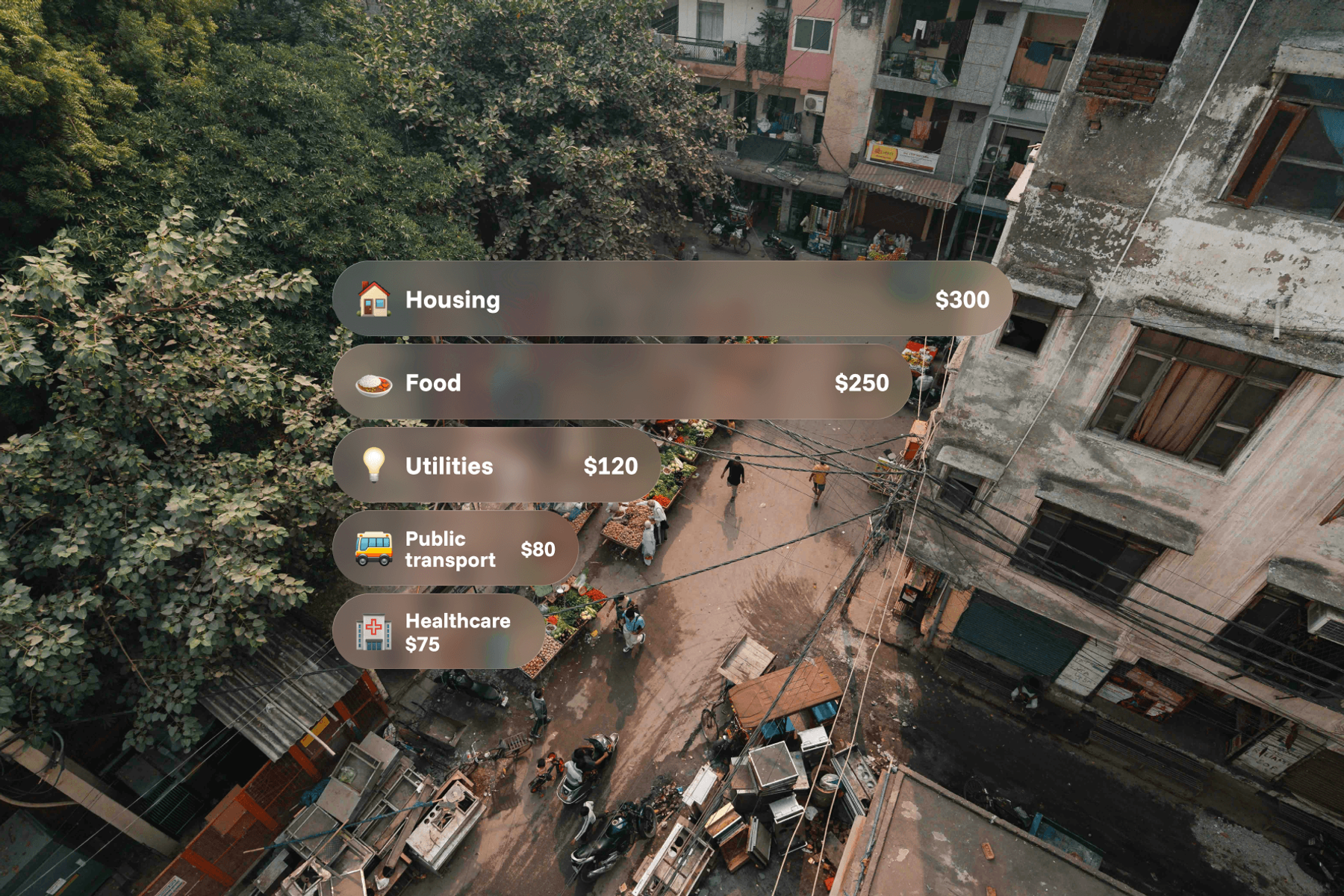
- Housing: $300
- Food: $250
- Transportation: $80
- Utilities: $120
- Healthcare: $75
- Ministry expenses: $200
- Miscellaneous: $150
Mid-range budget (urban or secondary city): $2,000–$2,600/month
- Housing: $600
- Food: $450
- Transportation: $180
- Utilities: $200
- Healthcare: $120
- Ministry expenses: $300
- Miscellaneous: $200
For families with children, add $300–$600/month depending on schooling choice. International schools in Manila can be expensive — budget accordingly if that's your plan. Homeschooling is a common and practical alternative.
Building Your Support Budget
The Philippines is an affordable missionary context, but underfunding your support budget doesn't serve you or your ministry. A realistic, specific number in your support raise communicates preparation and gives donors something concrete to fund.
For guidance on raising that support, see How to Create a Missionary Donation Page in 5 Minutes and compare approaches across different country contexts in Cost of Living in Mexico for Missionaries.