How to Launch a Missions Giving Campaign in Your Church

Vlad Radchenko · Co-founder, Sowfund · 6 min read | Sep 5, 2026
Most missions giving campaigns start with real energy. A pastor makes an announcement. Someone puts together a slide. Donations increase a little for a Sunday or two. And by the following Tuesday, it's mostly forgotten, filed away with the other things the church tried once.
The problem usually isn't that your congregation doesn't care about missions. It's that a single announcement was asked to do the job of an actual campaign. Here's the process that separates a missions giving campaign that raises real, sustained support from one that quietly fizzles out after opening weekend.
Step 1: Get Specific About What You're Raising For
"Support missions" is not a campaign. It's a category, and nobody gets excited about a category.
Before you do anything else, get specific. Are you raising support for a particular missionary your church has sent? A mission trip with a firm departure date? A defined project, like funding a well, a vehicle, or a semester of language school for someone your congregation already knows? The more specific the vision, the easier it is for people to picture exactly what their gift does.
If your church supports multiple missionaries, it's fine to run a broader campaign, but even then, name names. "We're raising $40,000 to fully fund the Martins' first year on the field" gives people something to hold onto in a way "supporting our missionaries" never will.
Step 2: Build a Small Team, Not a Committee
You don't need a large committee to launch a missions giving campaign, but you do need more than one person carrying it. A small team of three to five people, drawn from your missions committee, your generosity or stewardship team, and anyone with communications skills, gives the campaign enough structure to outlast the initial excitement of launch weekend.
Assign clear roles early: who's writing the communications, who's coordinating with the missionary or organization, who's tracking the goal, and who owns follow-up after the campaign ends. Campaigns that fizzle after week one are usually campaigns that one overworked staff member was trying to run alone.
Step 3: Set a Real Number and a Real Date
Vague goals produce vague giving. "Let's raise as much as we can" doesn't create urgency, because there's no way for anyone to know if the campaign is behind, on track, or done.
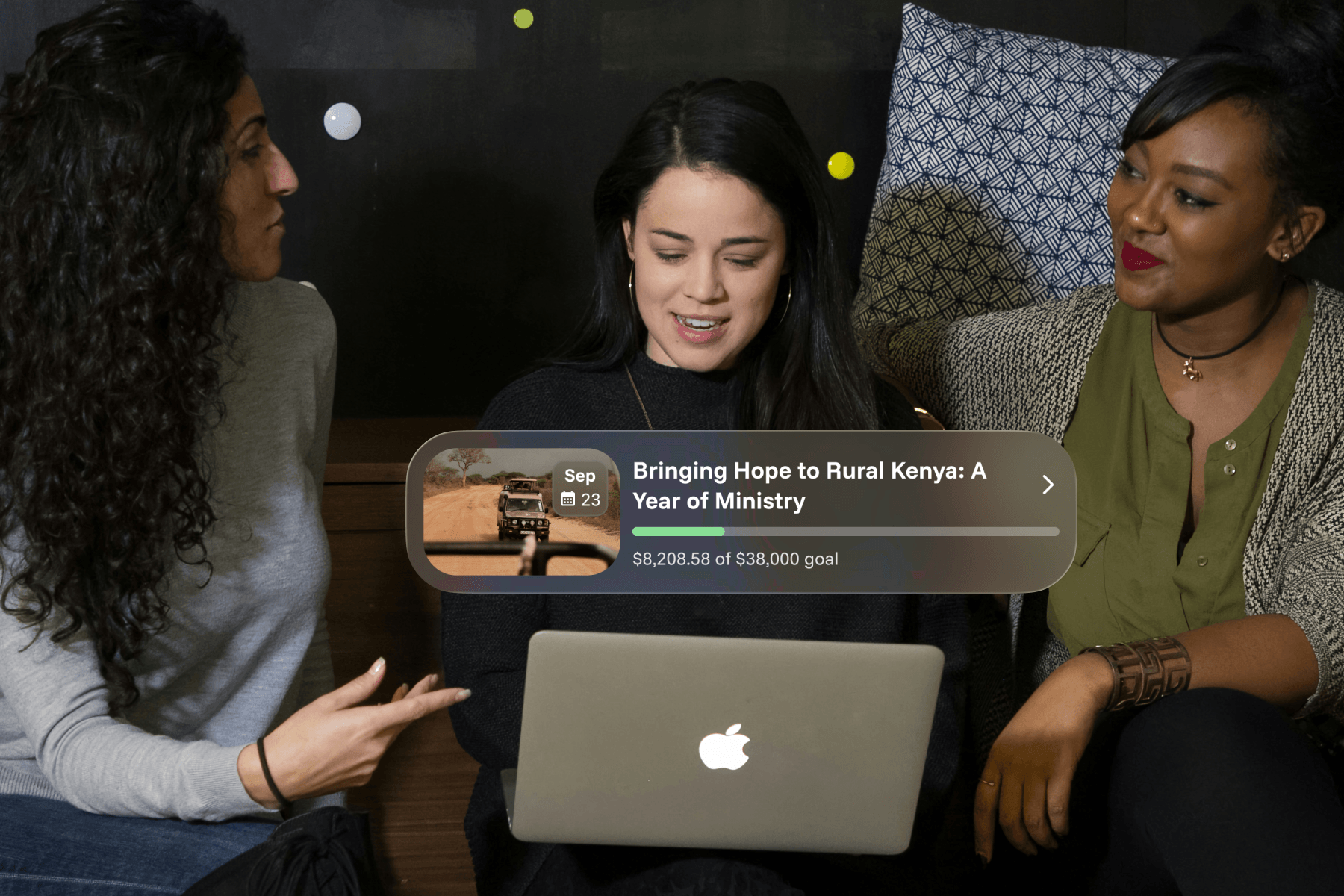
Set an actual dollar figure, tied to a real need you can explain in one sentence, and a real deadline. "We need $18,000 by the end of September so the Chens can leave for the field in October" gives your congregation both a target and a reason to act now. A simple thermometer graphic in the lobby or a progress bar online lets people see the campaign moving, which tends to pull in gifts from people who were on the fence.
Step 4: Pick the Format That Actually Fits Your Goal
Not every missions campaign needs to look the same, and the right format depends on your goal and your timeline more than on what your church has always done.
A dedicated missions Sunday works well for smaller, time-sensitive goals: one focused week built around a single ask, a testimony, and a clear giving moment. A multi-week series, three or four weeks of teaching and storytelling building toward a giving moment at the end, tends to work better for larger goals, like fully funding a missionary's first year. A matching gift challenge, where one generous donor or family agrees to match gifts up to a set amount during a defined window, is effective at moving people who were planning to give "eventually" to give now, since their gift is doubled. And a sponsor-a-missionary model, breaking the total need into recognizable units like a month of support or a portion of travel costs, works well when you want individuals or small groups to feel ownership over a specific piece of the need.
A $3,000 short-term trip and a $40,000 first-year support goal don't need the same campaign structure. Match the format to the number, not the calendar.
Step 5: Tell the Story Before You Make the Ask
The churches that see the strongest response to a missions campaign almost always do one thing well: they build the story before they build the ask. That means a few weeks of genuine communication, through the bulletin, a short video, a testimony from the missionary themselves if possible, before the giving moment ever arrives.
People give generously to things they feel connected to, not to things they've only heard about once. If the first time your congregation hears about a need is the same Sunday you're asking them to give, you've skipped the part that actually moves people to open their wallets.
Step 6: Strip Out Every Barrier to Giving
Once someone decides they want to give, don't let logistics talk them out of it. A campaign can generate real enthusiasm and still underperform if people can't figure out how to complete a gift in the moment they feel moved to.
At minimum, your campaign needs a digital giving link that works from a phone, a QR code visible on screen and in print, and, if your church supports it, a text-to-give option. If the campaign is built around a specific missionary who already has their own giving page, share that link directly rather than routing everything through a general church fund. Missionaries on platforms like Sowfund have a public profile, and your public profile lives as a short link that's easy to drop onto a bulletin insert, a slide, or a text message, with every gift tax-deductible for the donor and no extra processing on your church's end. How Churches Can Increase Giving in 2026 goes deeper into removing friction like this across your entire giving strategy, not just for missions specifically.
Step 7: Launch It Like It Matters, Then Keep Talking About It
However you structure the campaign, give it a real launch moment: a kickoff Sunday where the missionary shares in person or by video, a short and honest testimony rather than a polished pitch, and a single, clear call to action. If you're supporting an actual mission trip, Mission Trip Fundraising: Ideas Churches Actually Support has practical, tested ideas for individual missionaries raising their own support alongside a church-wide push, and the two can work well together rather than compete.
Most churches put all their energy into the launch and let the campaign quietly die afterward. That's a mistake, since the majority of giving in any campaign tends to arrive over the following weeks, not all at once on day one. Send real progress updates, not just reminders to give, alongside a story about what's happening on the ground. Campaigns that keep communicating during the giving window significantly outperform ones that go quiet after launch weekend.
Before You Launch: Five Things to Confirm
- A specific missionary, trip, or project named, not a general "support missions" appeal.
- A real dollar goal and a real deadline your team can repeat from memory.
- A giving link and QR code that work from a phone, tested before launch day.
- At least two weeks of story and communication planned before the ask goes out.
- A follow-up plan already in place for after the campaign ends, not something you'll figure out later.
Run through that list before you set a launch date. Campaigns that skip straight to the ask without these pieces in place are the ones that raise a little on day one and nothing after.
When the campaign wraps, close the loop. Thank your congregation specifically, report the final number, and follow up months later with what the gift actually made possible. That follow-through is what makes people willing to give generously again the next time you ask, and it's the difference between a campaign that happens once and a giving culture that keeps building on itself year after year.