
How Churches Can Increase Giving in 2026

Vlad Radchenko · Co-founder, Sowfund · 6 min read | May 20, 2026
Most churches aren't struggling with generosity. Their people want to give — to the local body, to the missionaries they've sent, to the needs in front of them. What they're often struggling with is friction: giving processes that are harder than they need to be, inconsistent communication about where the money goes, and a lack of infrastructure that makes recurring generosity easy to sustain.
The good news is that most of the barriers to increased giving are fixable — and in 2026, the tools available to church leaders are better than they've ever been.
Here’s what actually makes a difference.
1. Make Digital Giving the Path of Least Resistance
If your church still relies primarily on the offering plate, you're leaving a significant amount of generosity on the table. It's not that people don't want to give — it's that the moment of impulse passes, and there's no easy way to follow through after Sunday morning.
The baseline in 2026 should be a giving page that's accessible from your church website, a QR code in your bulletin and on screen during services, and a text-to-give option for those who need something even simpler. The fewer clicks between "I want to give" and "I gave," the higher your conversion rate.
This applies to one-time gifts, but it matters even more for first-time givers. Someone who gives online once, receives a good experience, and gets a proper receipt is significantly more likely to give again than someone who dropped cash in a plate and never heard another word about it.
2. Shift Your Focus to Recurring Giving
One-time gifts are valuable. But recurring monthly gifts are the financial foundation of a healthy church — and the closest thing to financial stability a ministry can have.
A donor who gives $200 once a year is wonderful. A donor who gives $50 a month — $600 per year — is transformative, because that gift is predictable. You can budget around it, plan around it, and build ministry around it.
The key to growing your recurring giving base is making it the default option, not the secondary one. When someone visits your giving page, monthly giving should be pre-selected. The ask should be framed as partnership, not payment: "Would you consider joining our team of monthly givers?" carries a different weight than "Would you like to set up automatic payments?"
When someone gives a one-time gift, follow up personally — not just with a receipt, but with a genuine conversation about what ongoing partnership could look like.
3. Communicate Impact, Not Just Need
The number one reason donors stop giving isn't that they run out of money. It's that they stop feeling connected to what their money is doing.
Churches that see consistent giving growth almost always have one thing in common: they close the loop. They tell stories. They report back. They show, specifically and personally, what generosity made possible — not in annual reports or budget slides, but in real narratives from real people whose lives were changed.
This doesn't require a communications team. It requires intention. One story from the field each month. One photo from the missionary your church supports. One testimony from the family that received help from the benevolence fund. That kind of regular, personal communication keeps donations feeling like participation — not obligation.
4. Preach on Generosity Without Apology
Many church leaders are reluctant to preach on giving. They worry about appearing money-focused, or making visitors uncomfortable, or looking like a televangelist stereotype.
But the silence is costly. When churches don't teach on generosity from Scripture — regularly, clearly, and without apology — they leave their people without a theological framework for their giving. Generosity becomes a cultural habit rather than a spiritual practice, and cultural habits fade when life gets busy.
A well-taught series on generosity — rooted in Scripture, honest about the church's financial reality, and compelling about what giving makes possible — typically produces one of the most meaningful lifts in giving a church can experience. Not because it guilts people into compliance, but because it connects the act of giving to something larger than a budget line.
5. Support the Missionaries You've Sent — and Make It Easy for Others to Do the Same
If your church has sent missionaries into the field, how are your people supporting them financially? And more importantly: how easy is it for them to do so?
This is an area where most churches have significant untapped potential. A missionary your congregation loves and prays for can often raise meaningful ongoing support from within the church body — if the giving infrastructure exists to make it easy.
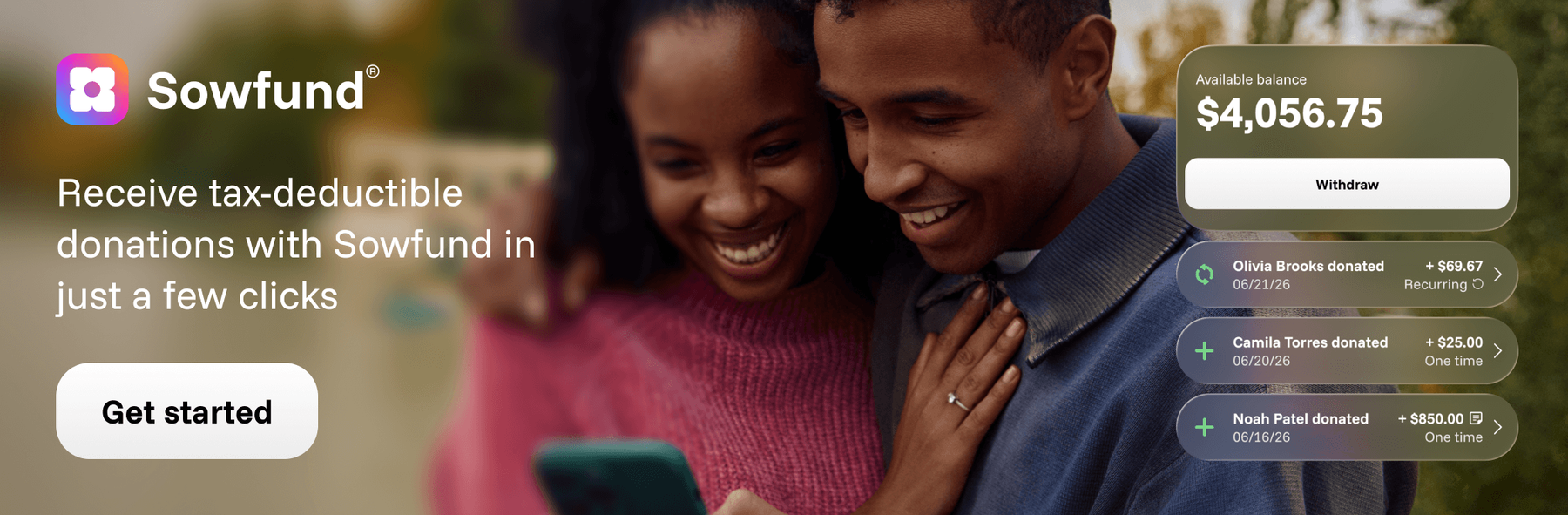
Platforms like Sowfund are built specifically for this. Missionaries on Sowfund have their own public profile page with a custom link (e.g., sow.fund/yourname), which your church can share in a bulletin, on screen during a service, or in a newsletter with a single tap. Every donation is tax-deductible to the donor — which matters when you're asking people to give monthly — and the missionary receives funds directly without any setup cost or subscription.
For churches that want to mobilize giving toward a specific missionary, the practical step is simple: share their Sowfund link, put the QR code on screen, and mention it by name. The infrastructure is already there.
6. Create Giving Moments Beyond Sunday Morning
Sunday morning is not the only moment people are ready to give. In fact, some of the most generous moments in a church's life happen at other times: a midweek prayer service, a special event, an online sermon that someone watches on Thursday night, a powerful baptism weekend, the end of a ministry year.
Make sure your giving infrastructure is present in all of those moments, not just one. A QR code in every email newsletter. A giving link in every sermon video description. A dedicated giving campaign tied to a specific event or mission. The goal is to meet generosity where it happens — not to funnel it through a single channel.
Year-end giving is particularly powerful and underutilized. Many donors are thinking about charitable deductions in November and December, and a well-timed, well-communicated year-end campaign — with a clear deadline and a specific vision — can account for a significant portion of annual giving. Don't let that window close without a focused effort.
7. Remove Barriers for First-Time Givers
First-time givers are your most important givers — not because of what they give now, but because of what they represent: someone who moved from observer to participant.
Everything about the first-time giving experience should be frictionless and affirming. No account creation required. No confusing fee language. No ambiguous confirmation screen. A personal thank-you that feels like it actually came from a person, not a payment processor.
If your current giving system creates confusion at any of these points — or if first-time givers routinely don't hear anything after their gift — that's worth fixing before running any campaign to bring in new donors.
The Bottom Line
Increasing giving in your church rarely requires a major campaign or a capital push. More often, it requires removing the friction that slows generous people down, telling the stories that keep them connected to what their giving does, and building the recurring giving infrastructure that turns one-time moments of generosity into long-term partnership.
The tools are available. The people in your church want to give. The most important thing is making it easy for them to follow through.