Why Sowfund Is the Best Platform for Digital Ministry Workers

Vlad Radchenko · Co-founder, Sowfund · 5 min read | Jul 26, 2026
The image of a missionary hasn't kept pace with how ministry actually happens in 2026. Alongside the church planter in rural Southeast Asia and the Bible translator in West Africa, there is an entire generation of people doing serious, fruit-bearing ministry work through digital means, and they often can't find a financial support structure designed for them.
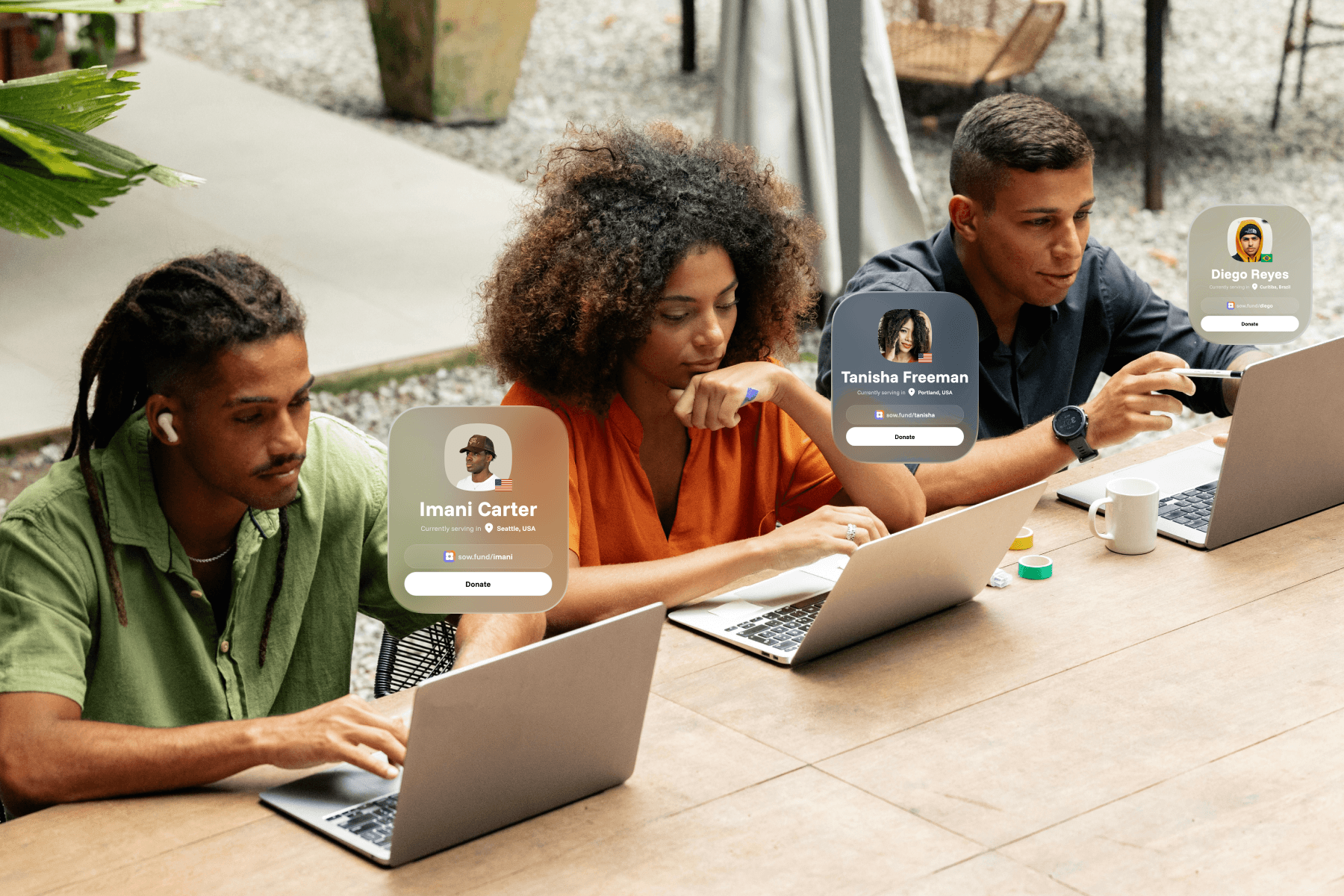
If you're discipling people through a podcast, reaching a closed country through YouTube, running an online Bible study for college students scattered across ten cities, or doing evangelism through social media in a language your sending church doesn't speak, you are doing real ministry. And Sowfund is built to support you.
What Digital Ministry Actually Looks Like
Non-traditional digital ministry takes many forms, and the list is only growing:
Christian content creators, YouTube channels, podcasts, Instagram accounts, TikTok creators, who produce teaching, evangelism, or discipleship content that reaches audiences no single church building could hold. Many of these creators have built communities of thousands of people who are being genuinely shaped by their work.
Online church planters building intentional Christian communities for people who are geographically isolated, digitally native, or in regions where physical church is dangerous or inaccessible.
Digital evangelists targeting specific language groups, diaspora communities, or closed-access countries through video, social media, and messaging platforms, reaching people that a traditional missionary with a visa could not.
Email and writing ministries, newsletters, blogs, and online devotional communities, that provide consistent theological formation and pastoral care to subscribers around the world.
Virtual discipleship workers conducting one-on-one and small-group discipleship through video calls with people they've never met in person, often across significant geographic and cultural distance.
What all of these share is that the ministry happens primarily through a screen, the audience is distributed rather than gathered in one place, and the traditional infrastructure of the church, a building, a congregation, a denomination, is either absent or secondary to the work.
The Problem These Workers Face
Despite the clear impact of digital ministry, people doing this work face a consistent problem: the existing financial support structures weren't designed for them.
Traditional missionary platforms and sending organizations are built around a specific model, an individual or family relocating to another country, affiliated with a mission organization, serving within a defined geographic context. That model excludes most digital ministry workers, even those whose global reach dwarfs what any single traditional missionary could achieve.
The result is that many digital ministry workers cobble together informal income: selling courses, accepting PayPal donations (which aren't tax-deductible), using Patreon (built for creators, not ministry), or simply not being financially supported at all and doing the work around a day job.
None of these are adequate for someone whose ministry has grown to the point where real financial support would allow them to go deeper, create more, and reach further.
Why Sowfund Works for Digital Ministry
501(c)(3) fiscal sponsorship without geographic restrictions. Sowfund's fiscal sponsorship structure does not require you to be serving overseas. It requires that your work is genuinely ministry in nature, evangelism, discipleship, teaching, and care in a Christian framework. A podcaster discipling thousands of listeners qualifies. An online Bible teacher reaching diaspora communities qualifies. The test is the nature of the work, not the location.
This means donors who give to your Sowfund page receive a fully tax-deductible receipt, the same as a donor giving to a missionary in East Africa. For supporters who want to give charitably but need the tax benefit to do so, this is the difference between being able to give and not.
A shareable giving page that works for an online audience. Your Sowfund page at sow.fund/yourname is a clean, direct giving URL that works exactly the way an online audience expects it to. You put it in your YouTube description, your podcast show notes, your Instagram bio, your email newsletter footer. Someone who has been following your work for a year and wants to support it clicks the link, gives in under a minute, and receives a receipt. No friction, no confusion.
Recurring giving for a subscriber-style support model. The way online audiences relate to creators they love already has a recurring quality. They watch every video, listen to every episode, open every email. Sowfund's recurring giving feature channels that existing loyalty into monthly financial support. This is a more sustainable model than asking for periodic one-time gifts from an audience that already has a consistent relationship with your work.
No subscription cost. Many creator monetization platforms charge monthly fees before you've received a dollar. Sowfund has no subscription cost, just a 5% platform fee on donations, with roughly 85% of donors choosing to cover that fee themselves at checkout. For someone in early-stage ministry support, starting with no overhead matters.
Mail-in check support for older donors. Online ministry often builds audiences that span generations. The college student who found your podcast and the 65-year-old who has listened for three years are both part of your community. Sowfund accepts mail-in checks with a flat $3 processing fee, which means the older donors in your audience who aren't comfortable giving online have a path to support you too.
What This Looks Like in Practice
A Christian podcast host with 15,000 monthly listeners sets up a Sowfund page and mentions it twice per episode. Three hundred listeners, 2% of the audience, set up a $20/month recurring gift. That's $6,000/month in tax-deductible recurring support, generated from an audience that was already listening and already wanted to contribute to the work.
An online discipleship worker conducting weekly video calls with believers in a country hostile to Christianity uses Sowfund to receive support from her sending church and from individuals in her personal network. Her church can give monthly directly through her page the same way they'd support a traditional missionary, with full tax documentation and no administrative complexity.
The Platform Your Ministry Has Been Missing
If you've been doing meaningful digital ministry without a real financial support structure, or with a patchwork of platforms that weren't built for what you're doing, Sowfund closes that gap. It gives you the fiscal sponsorship, the giving infrastructure, and the recurring giving model that allows you to do your work without the constant friction of financial improvisation.
Ministry that happens online is still ministry. Your supporters deserve a tax-deductible way to give to it, and you deserve a platform that takes your work as seriously as you do.