Best Ways to Send Money to a Missionary Abroad

Vlad Radchenko · Co-founder, Sowfund · 6 min read | Aug 5, 2026
A church wants to send its missionary family a gift for Christmas. A grandmother wants to help her granddaughter cover a plane ticket back to the field. A missions committee wants to start a recurring monthly commitment. All three run into the same question: what's actually the best way to get money to someone serving overseas?
The honest answer is that it depends on what you're optimizing for. Some methods are fast but expensive. Some are cheap but slow. Some don't work internationally at all, even though people assume they do. And only one type of transfer creates a tax-deductible gift for the person sending it. Here's how the common options actually compare.
What Actually Matters When You're Choosing
Before comparing specific services, it helps to know what you're weighing. Four things usually decide which method makes sense for a given gift.
Fees. Every method charges something, whether that's a flat transfer fee, a percentage cut, or a markup built into the exchange rate. The total cost is often higher than the advertised fee once currency conversion is included.
Speed. Some transfers land in minutes. Others take several business days, and a few can stretch to a few weeks depending on the destination country.
Whether it works internationally at all. A few popular US payment apps are built for domestic use only. It's a common and understandable mistake to assume they'll work for a missionary overseas when they simply can't.
Tax-deductibility. This is the one people miss most often. A personal transfer, no matter which app or bank sends it, is a gift to an individual. It is not a charitable contribution, and it cannot be deducted on the sender's taxes, unless the money passes through a registered 501(c)(3) nonprofit along the way.
Bank Wire Transfer
A traditional bank wire is one of the more reliable ways to move a larger sum internationally. It goes bank to bank, which makes it familiar to churches with finance committees and formal accounting processes.
An outgoing international wire from a US bank typically costs between $35 and $50, and the recipient's bank may charge its own incoming fee on top of that. Beyond the flat fee, the bigger cost is usually hidden in the exchange rate itself. Banks commonly build in a markup of about 1% to 3% above the true mid-market rate, so the missionary receives less than a straight currency conversion would suggest. Once sent, a wire generally lands in the recipient's account within one to two business days.
Wire transfers are a solid choice for a one-time, larger gift, such as a church's annual missions offering to a specific family. They're less practical for smaller, recurring monthly support, since the flat fee eats up a larger share of a small gift every time it's sent.
Western Union
Western Union is built specifically for cross-border transfers and has physical pickup locations in most of the countries where missionaries serve, which makes it useful in places with limited banking infrastructure.
Fees generally run between 0.5% and 4% of the amount sent, depending on the destination, the payout method, and how the sender pays. Cash pickup is the fastest option, often available within 15 to 30 minutes of sending. Transfers to a bank account typically take about two business days, though Western Union flags some countries as slower to process, where a transfer can take up to three weeks.
This makes Western Union a reasonable option when a missionary needs cash quickly in a country where card and bank access is limited, but it's rarely the cheapest option for routine, ongoing support.
PayPal
PayPal is often the first thing people try, mostly because it's already installed on their phone. For sending money abroad as a personal gift funded by a bank account or PayPal balance, the fee is typically 5% of the amount, with a minimum of $0.99 and a maximum of $4.99. Funding the transfer with a credit or debit card adds a further charge on top of that. If PayPal performs the currency conversion, it also applies its own exchange rate markup, generally in the 3% to 4% range.
PayPal Giving Fund exists for donations to registered nonprofits, but it isn't available to individual missionaries raising personal support, only to organizations. A personal PayPal transfer to a missionary is a gift to an individual, which means it is not tax-deductible, and using PayPal's Friends & Family option for fundraising also runs against PayPal's own terms of service for that transfer type.
A closer look at how PayPal and Sowfund compare on fees and features is in PayPal vs Sowfund for Missionary Fundraising.
Venmo and Zelle: Why They Don't Work for This
Both of these are worth mentioning because they're so commonly assumed to work internationally, and they don't.
Venmo is built exclusively for use within the United States. Both the sender and recipient need a US bank account, a US-issued card, and a US phone number, and the app simply won't function for someone signed in from overseas. Zelle has the same limitation. It connects directly to US bank accounts on both ends of the transaction, and a payment to a recipient without a US bank account will not go through at all.
If a missionary still has an active US bank account and checks it occasionally on visits home, these tools might work for that specific account, but they're not a reliable way to get money to someone actually living and banking overseas.
Wise (formerly TransferWise)
Wise is built specifically for international transfers and has become a common recommendation as a cheaper alternative to banks. It uses the real mid-market exchange rate rather than adding a hidden markup, and charges a transparent fee that's disclosed upfront before the transfer is sent. For many currency routes, the total cost ends up meaningfully lower than a traditional bank wire, particularly for larger amounts.
Like a wire transfer, a Wise transfer is still a personal payment to an individual. It's efficient and transparent, but it doesn't create a tax-deductible gift on its own.
The Tax-Deductibility Question
This is the detail that changes the calculation for a lot of donors, especially churches and supporters who give at meaningful levels. None of the methods above, wire transfer, Western Union, PayPal, or Wise, create a tax-deductible gift, because in every case the money is moving directly to an individual rather than to a registered 501(c)(3) nonprofit.
For a small, occasional gift, that may not matter much. For a church writing a recurring line item into its missions budget, or a donor giving consistently at a few hundred dollars a month, it often matters a great deal. Some donors simply can't give from a formal budget to an individual at all, and many more would give more, or give longer, if the gift qualified as a charitable contribution.
Where Sowfund Fits
Sowfund takes a different approach to the same problem. It operates as a registered 501(c)(3) nonprofit, so a gift made through a missionary's Sowfund page goes to the nonprofit and is allocated specifically to that missionary's work. That structure is what makes the gift tax-deductible for US donors, with an automatic IRS-compliant receipt sent the moment they give.
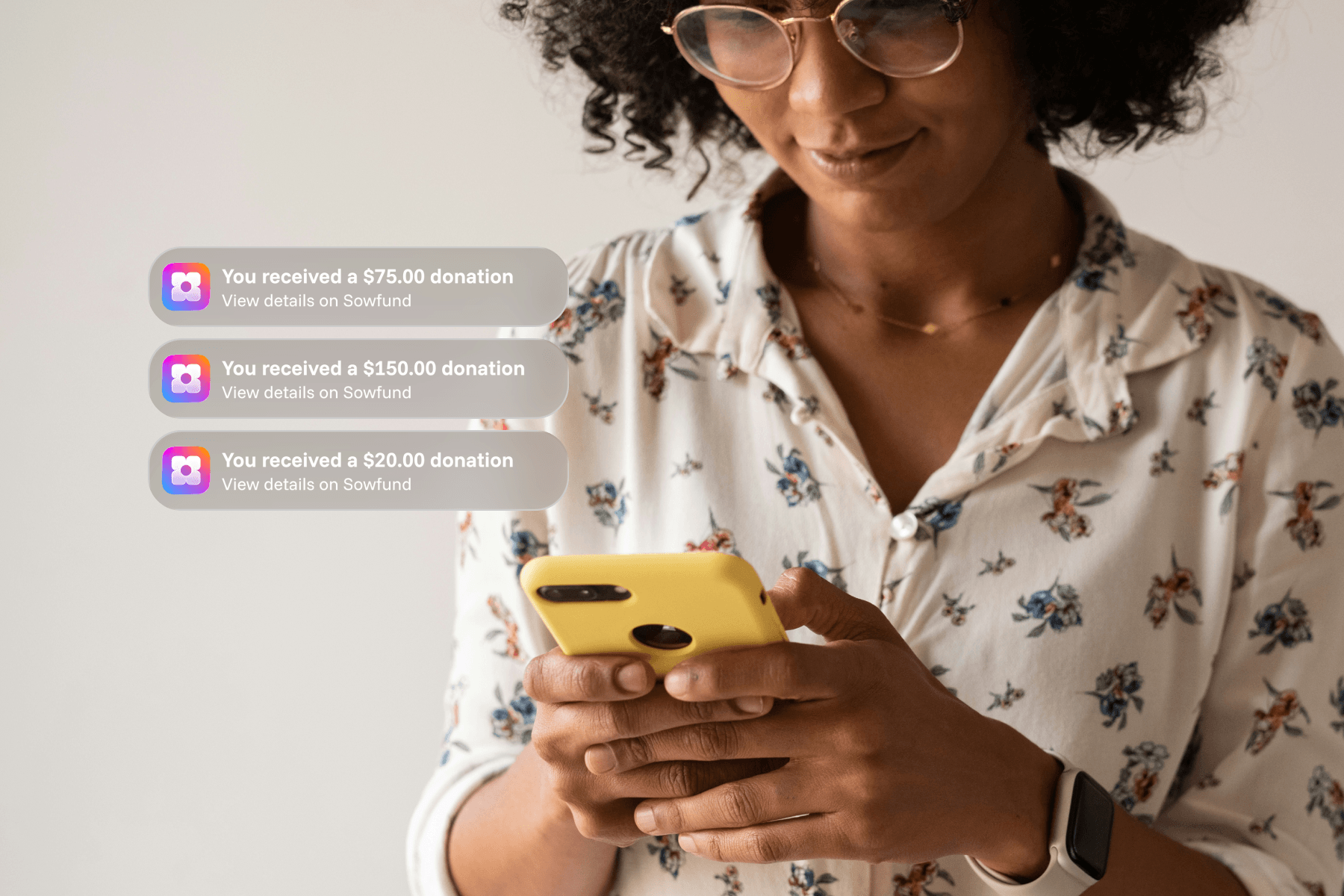
Sowfund charges a 5% platform fee on donations, and roughly 85% of donors choose to cover that fee themselves at checkout, so most missionaries end up receiving close to the full gift. There's no subscription cost to maintain a page, and once a missionary is approved, their giving page is live and ready to receive both one-time and recurring monthly gifts. For a church setting up ongoing support, that recurring structure mirrors how most missions budgets already work: a monthly commitment rather than a series of one-off transfers.
More on how this works for churches specifically is in How Your Church Can Support Missionaries via Sowfund.

Choosing the Right Method
For a quick, informal gift, a payment app or wire transfer will get the job done, as long as the sender and recipient both understand it isn't deductible. For ongoing, structured support, especially from a church or a donor who wants the tax benefit, a platform built around a registered nonprofit is generally the better fit.
The right answer depends less on which method is objectively best and more on what the gift is for: a one-time transfer to help with an emergency, or a long-term commitment to someone's ministry. Knowing the difference in fees, speed, and tax treatment ahead of time makes it easier to choose well the first time.